
As an important tool for logistics transportation, the health of the Flatbed semi trailer’s tires directly affects the vehicle’s driving safety and operating costs. However, many car owners have encountered the situation of “tire eating” of Flatbed semi trailers, that is, abnormal wear of tires, resulting in shortened tire life and the need for frequent replacement. So, what is the reason for Flatbed semi trailer tire eating? And how to effectively prevent it? This article will reveal it to you one by one.
1. Common causes of Flatbed semi trailer tire eating
Improper tire pressure:
Too high: Too high tire pressure will cause excessive wear in the middle part of the tire, affecting the tire’s grip and comfort.
Too low: Too low tire pressure will cause excessive wear on both sides of the tire, increase rolling resistance, and lead to increased fuel consumption.
Inaccurate tire positioning:
If the positioning parameters such as the toe and camber angle of the tire are inaccurate, it will cause abnormal wear of the tire during driving, especially on the inside or outside of the tire.
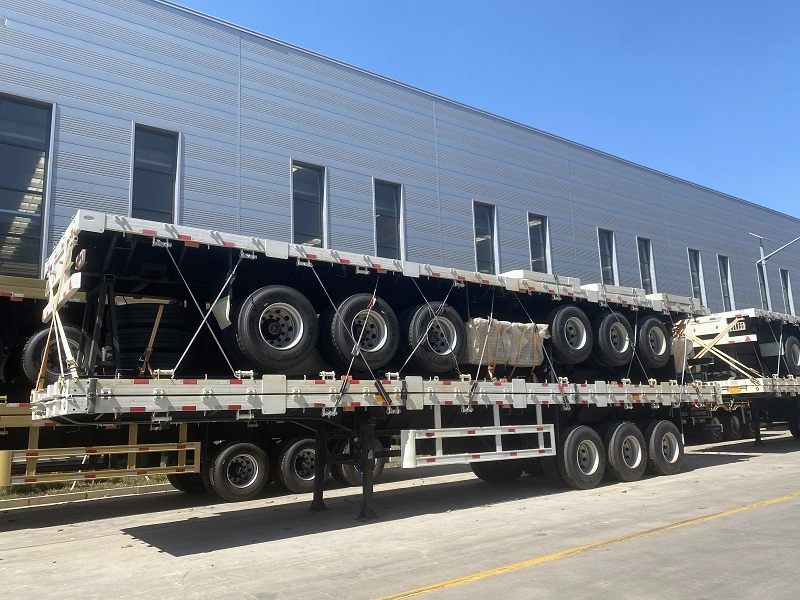
Uneven load:
During the transportation of the Flatbed semi trailer, if the cargo is unevenly distributed, some tires will be under excessive pressure, accelerating the wear of these tires.
Poor road conditions:
Driving on rough roads for a long time, or frequently encountering sharp objects, will cause the tires to wear more.
Improper tire quality or model:
Using tires of poor quality or unsuitable for Flatbed semi trailers will also cause tires to wear faster.
2. Preventive measures for Flatbed semi trailer tire wear
Check tire pressure regularly:
Check and adjust tire pressure regularly according to the pressure value recommended by the tire manufacturer to ensure that the tires are in the best working condition.
Periodically perform tire alignment:
Go to a professional repair shop regularly for tire alignment inspection and adjustment to ensure that the tires maintain the correct posture during driving and reduce abnormal wear.
Reasonable loading of goods:
When loading goods, try to ensure that the goods are evenly distributed to avoid excessive pressure on one side or one axis.
Choose the right tire:
Choose a reliable and suitable tire model according to the use environment and load conditions of the Flatbed semi trailer.
Check tire condition regularly:
Check the tire surface regularly for cracks, bulges, foreign objects piercing, etc., and deal with them in time to prevent small problems from becoming big hidden dangers.
Avoid bad road conditions:
Try to avoid driving on rough roads or roads with sharp objects. Slow down when necessary to reduce the impact on the tires.
Replace tires regularly:
Even if the tires are not obviously worn, it is recommended to replace them regularly, especially tires that have exceeded their service life or mileage, to ensure driving safety.
III. Conclusion
Tire eating of Flatbed semi trailers is a common problem, but it can be effectively prevented and reduced through scientific management and maintenance. I hope that the cause analysis and preventive measures provided in this article can help the majority of car owners better protect their tires, extend the service life of tires, ensure driving safety, and reduce operating costs. Remember, regular inspection and maintenance are the key to keeping tires healthy!