
In the field of logistics and transportation, trailers and semi-trailers are two common means of transportation. There are certain differences in their structure, purpose and operation.
This article will give you an in-depth analysis of the difference between trailers and semi-trailers, helping you better understand and choose the right means of transportation.
Full trailer: A full trailer is attached to the back of an ordinary car, and the two are connected by a hook. The full trailer can increase the loading capacity of the truck, reduce fuel consumption, and thus reduce transportation costs.
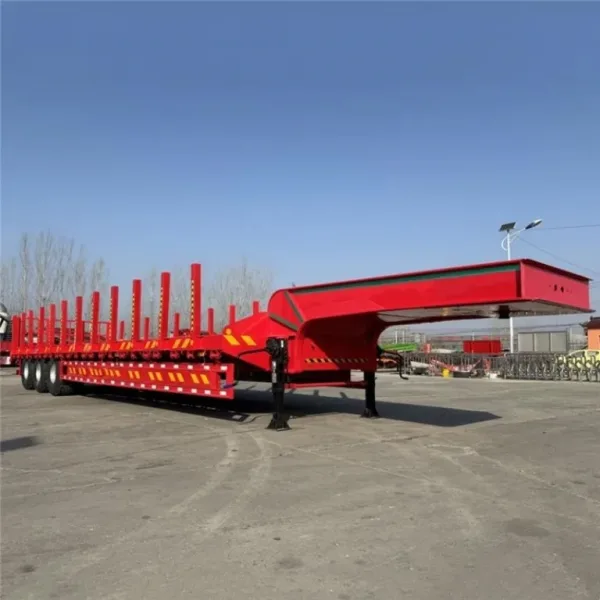
Semi-trailer: A semi-trailer is connected to the back of a tractor, and they are supported on the tractor through the traction seat of the semi-trailer.
Similarities: Neither of them has its own power unit. The car train composed of them and the tractor belongs to the category of cars. A semi-trailer is a trailer with an axle placed behind the center of the vehicle, provided that the vehicle is evenly loaded and equipped with a connecting device that can transmit horizontal or vertical forces to the tractor.
Differences: A full trailer has front wheels, while a semi-trailer has no front wheels. A full trailer has two axles, while a semi-trailer has only one axle. Many novices who have just come into contact with trailers will ask what the difference is between a full trailer and a semi-trailer.
In fact, they are just connected in different ways to the towing car in front. The more common semi-trailers are trailers, large container transporters, etc., which are more common on highways.